


Cornerstone

Growth with purpose

Challenge

Cornerstone had a catalog, not a story. They’d accumulated services without accumulating meaning, responding to what the market asked for without ever asking what place they wanted to hold in their clients’ lives. That showed up as three concrete misalignments. The visual identity hadn’t been worked on: strip away the logo and a document became unidentifiable, the typeface (Montserrat) and generic corporate blue blended them into every other firm in the sector.

The story wasn’t cohesive: every deck, every pitch, every email told a different version of who they were. And nothing was aligned, not the name («Cornerstone Ventures» risked locking them into a venture-capital imagination they didn’t fully want), not the tone, not the brand promise actually matched what they did with clients day to day.

Process

Three phases, three deliverables.

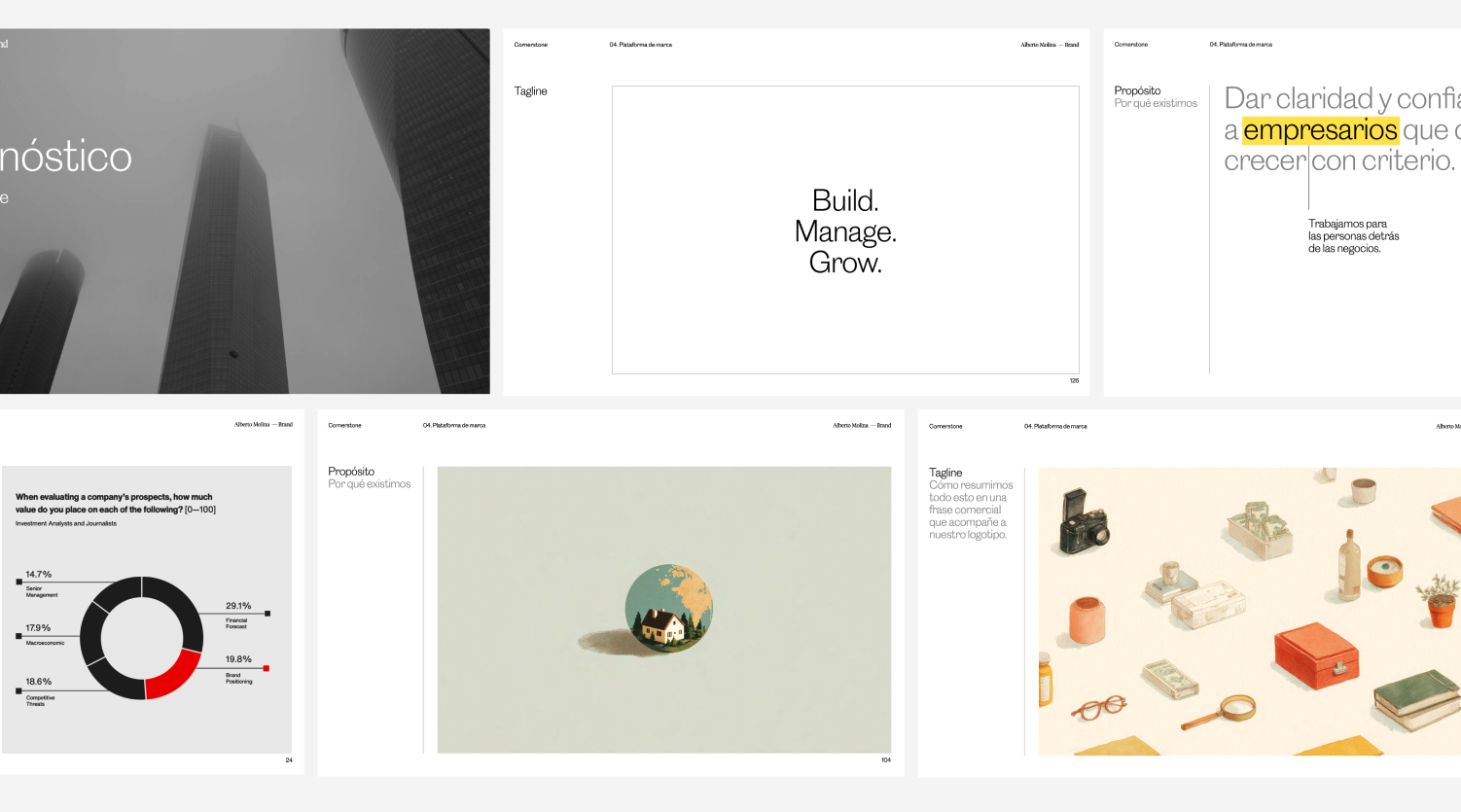
The diagnostic started by understanding what they already were before projecting what they needed to become: market analysis (80% of Spanish SMEs lack strategic financial planning), benchmarking against Big Four firms and M&A boutiques, and an empathy exercise with their two real audiences, the founder looking for a true partner instead of a vendor, the SME that wants to «play in a different league» without hiring a Champions League squad. From there came the brand platform: purpose, vision, mission, positioning, beliefs, and a tagline built to hold up in every sales close.

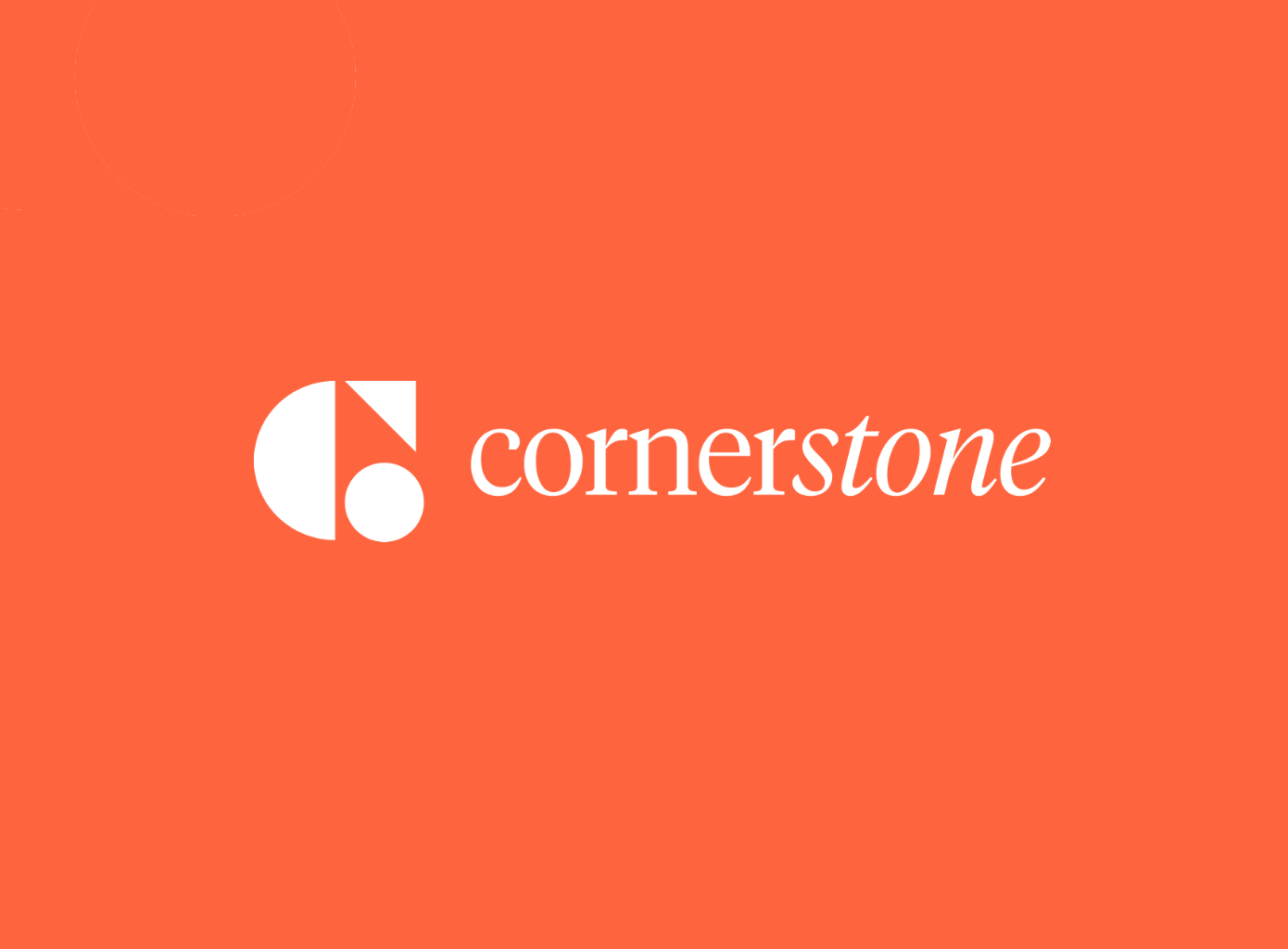
The visual identity was treated as a decision, not a coat of paint: two creative routes were presented, a sober signature built around a serif and a diamond mark («our cornerstone»), and a more constructive proposal, a logotype assembled from three geometric pieces.

Result

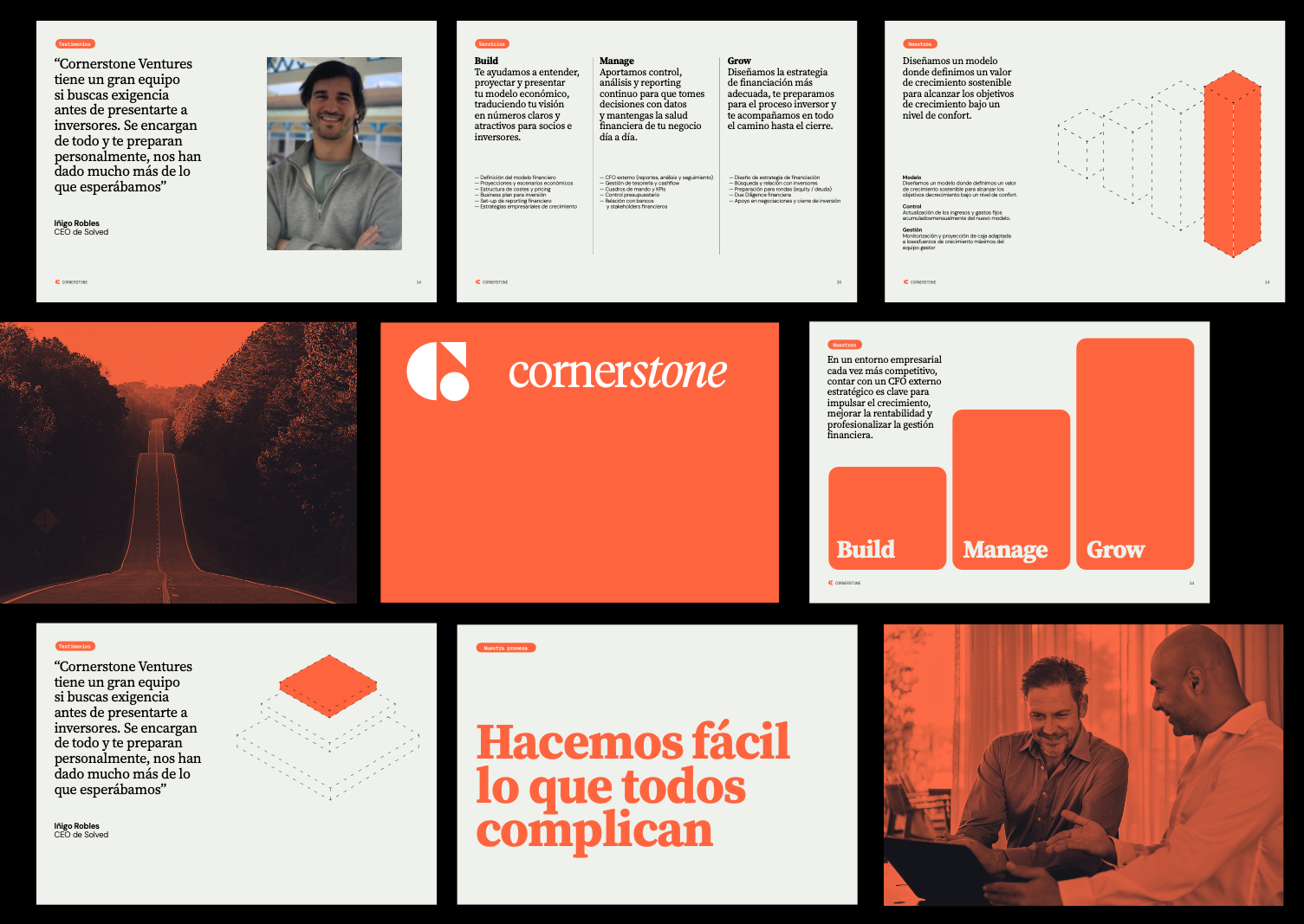
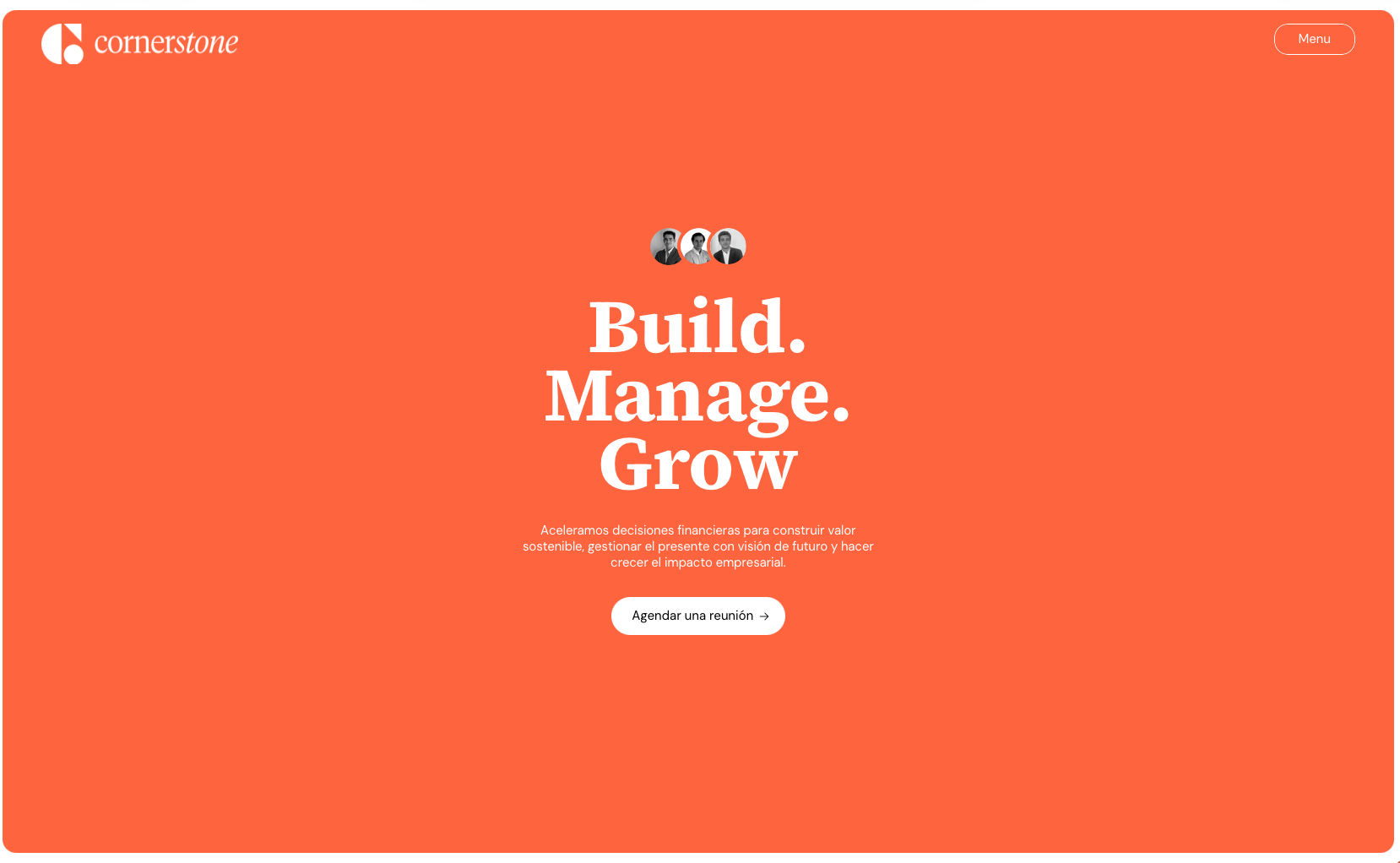
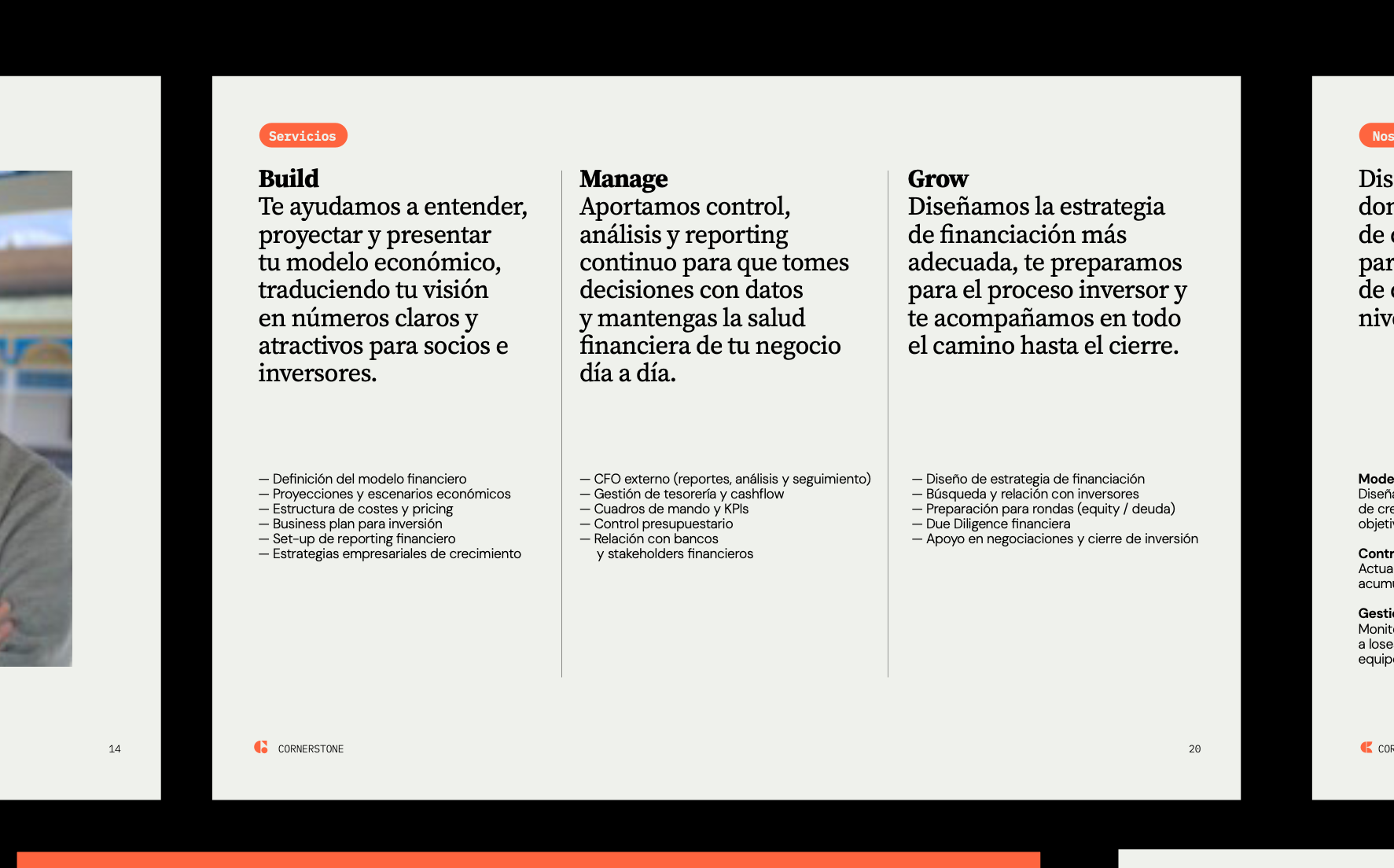
Build. Manage. Grow. The tagline isn’t decoration, it’s the spine holding everything else up. The three verbs organize the positioning («the boutique firm that makes the complex easy, and the possible profitable»), the service architecture (financial model definition, outsourced CFO, fundraising strategy), and the logotype itself, where each geometric piece corresponds to a verb.

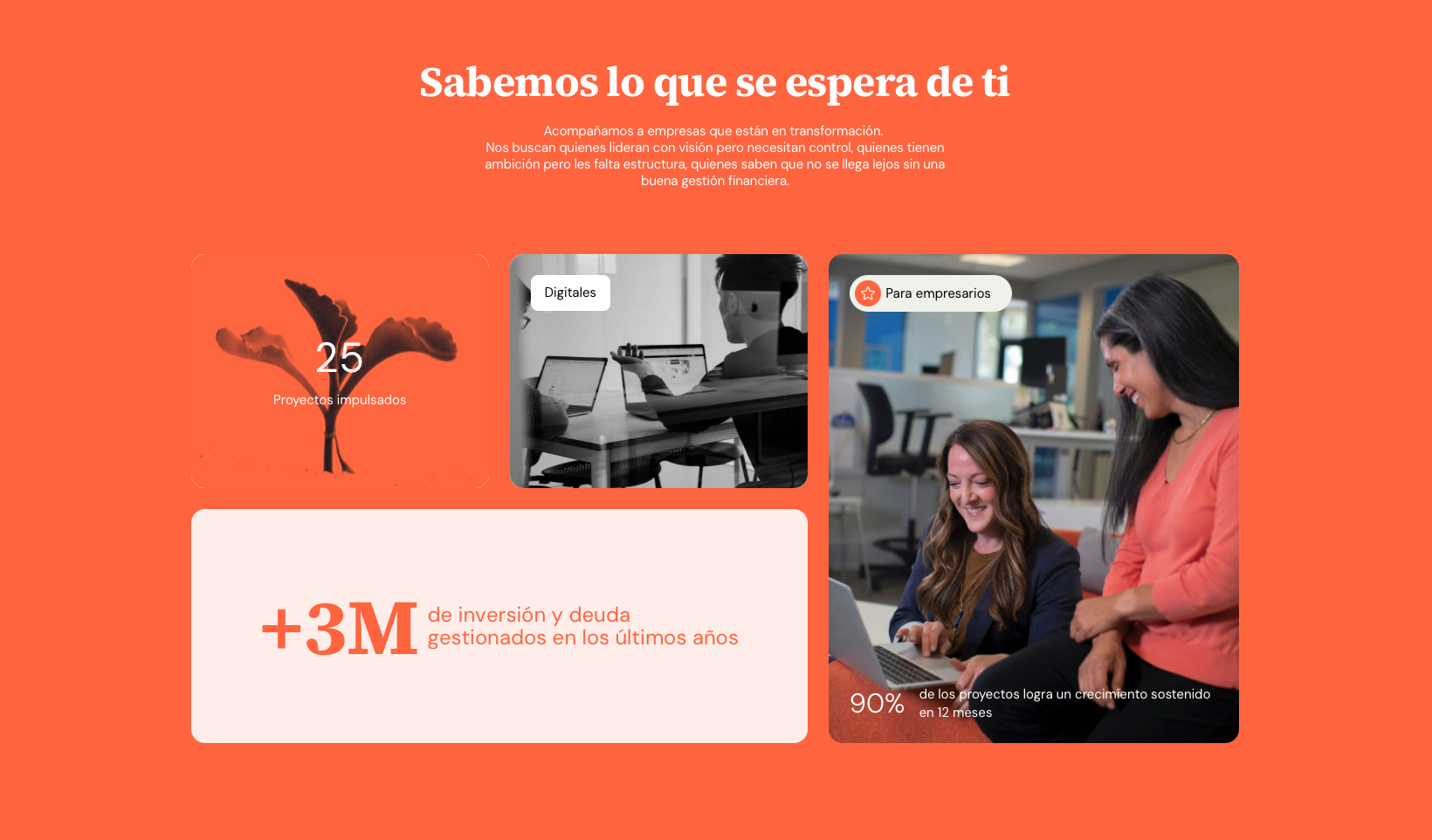
The typography (Source Serif 4 for headlines, DM Sans for body) and a palette that trades corporate blue for orange, yellow, and beige, progress, opportunity, balance, close the system. Cornerstone stops being a name that needs explaining and starts being a promise that’s recognizable without the logo.